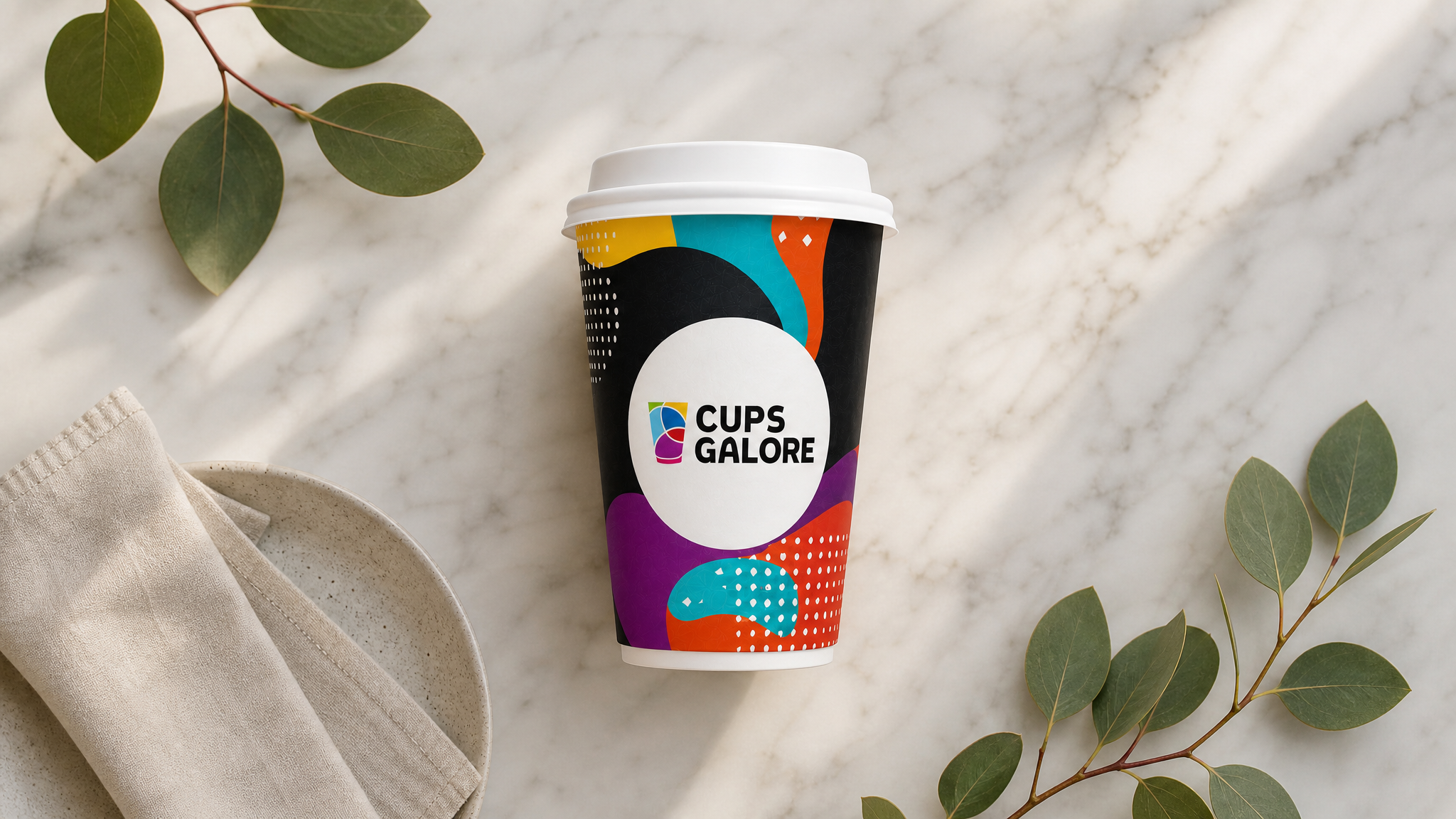
The single largest amplifier of cafe brand reach in Australia is the customer photograph. Someone holds a cup, takes a picture, posts it to Instagram or TikTok, and that image reaches an audience the cafe could not afford to buy through paid media.
Some cups get photographed constantly. Some cups get photographed rarely. The difference is almost never quality of coffee or aesthetic of cafe. The difference is cup design.
Here is what actually separates a photographable cup from an ignored one, and how cafes can design for the camera without losing their brand identity in the process.
What the camera sees
A phone camera holds a paper cup at arm's length in mixed indoor lighting. What the camera captures is a lot less than what the eye sees. Fine detail disappears. Subtle colour gradations flatten. Type below a certain size becomes unreadable in the resulting image.
That means a cup that looks great on a designer's screen at 100 per cent may look muddy or generic in a phone photograph. The best cup designs pass the phone-photo test before they go to print.
Three design choices that photograph well
High contrast. Strong contrast between the mark and the background reads clearly in low-light and mixed-light phone photography. Cups with subtle tone-on-tone treatments often look flat in photograph.
Bold, simple marks. A single strong mark holds up in photography. Complex illustration or fine linework tends to lose definition at phone camera resolution.
Distinctive colour palette. A cup that carries a unique or unusual colour becomes visually shareable. It stands out in someone's Instagram feed against a hundred generic white and brown cups.
Three design choices that photograph badly
Fine type below a certain size. Instagram displays photos at compressed resolution. Type designed to be read up close disappears in the compression.
Subtle colour or tonal work. Low contrast reads as flat in phone photography. What the eye sees as sophisticated the camera sees as washed out.
All-white cups. They photograph but they do not stand out. If the goal is user-generated content, plain white cups underperform.
The finish decision
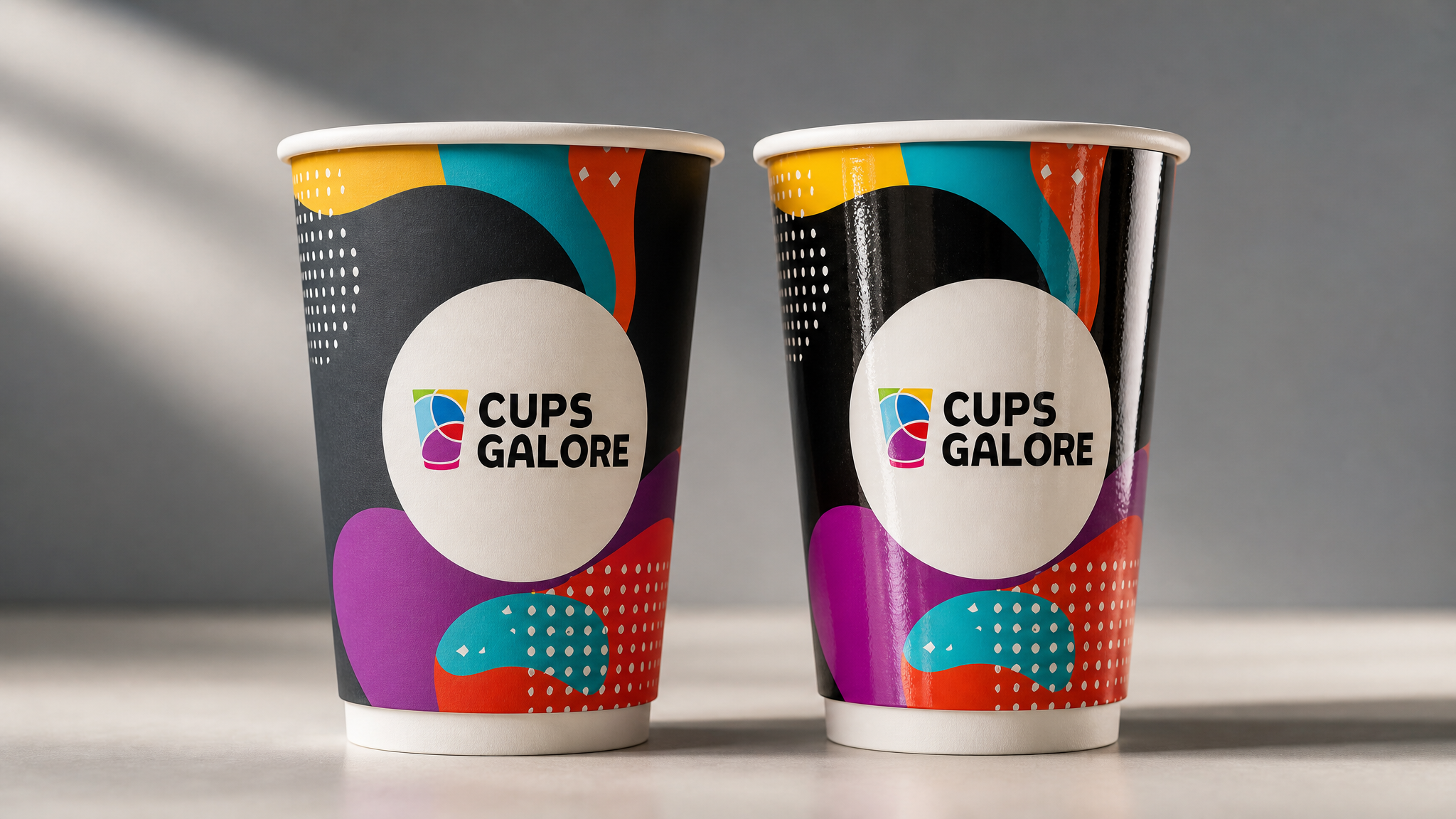
Matte and gloss both photograph, but they do it differently.
Matte absorbs light. Colours read as saturated and rich. Reflections are minimal, so the cup surface reads cleanly in most lighting conditions. Matte photographs well in editorial and lifestyle contexts.
Gloss reflects light. Colours read as bright and punchy. Reflections can catch light dramatically in daylight or under strong overhead lighting, which can be beautiful or distracting depending on the shot. Gloss photographs well in daylight and outdoors.
Neither is right or wrong. The choice depends on the environment the cup will most often be photographed in.
The size question
An 8oz cup gives less surface area for design. A 16oz cup gives more. The design system needs to work across both.
The strongest cafe brands design for the smallest size first. If the mark reads cleanly at 8oz, it will scale up cleanly to 16oz. The reverse rarely works.
Beyond the cup itself
Two things extend the photograph well beyond the cup.
Consistent packaging system. The cup, the sleeve, the takeaway bag and any inserts working as a visual system. Photographers instinctively frame all of them together. Consistency across the system amplifies the cafe brand more than any single element in isolation.
Genuine sense of place. The cup photographed in the cafe environment reads differently to the same cup photographed on a home desk. Cafes that create a photographable environment behind the cup extend the reach of every image.
The takeaway
The best cafe cup designs are engineered for the camera without losing their brand identity. High contrast, bold marks, distinctive colour, deliberate finish choice. Cafes that treat their cup as brand media rather than functional packaging drive user-generated content that no paid campaign can match at the same cost.
Cups Galore's in-house design assistance produces cup artwork built for physical production and the phone camera. HACCP and ISO 9001 certified, custom printed in Australia.
Talk to us about your brand's cup design.