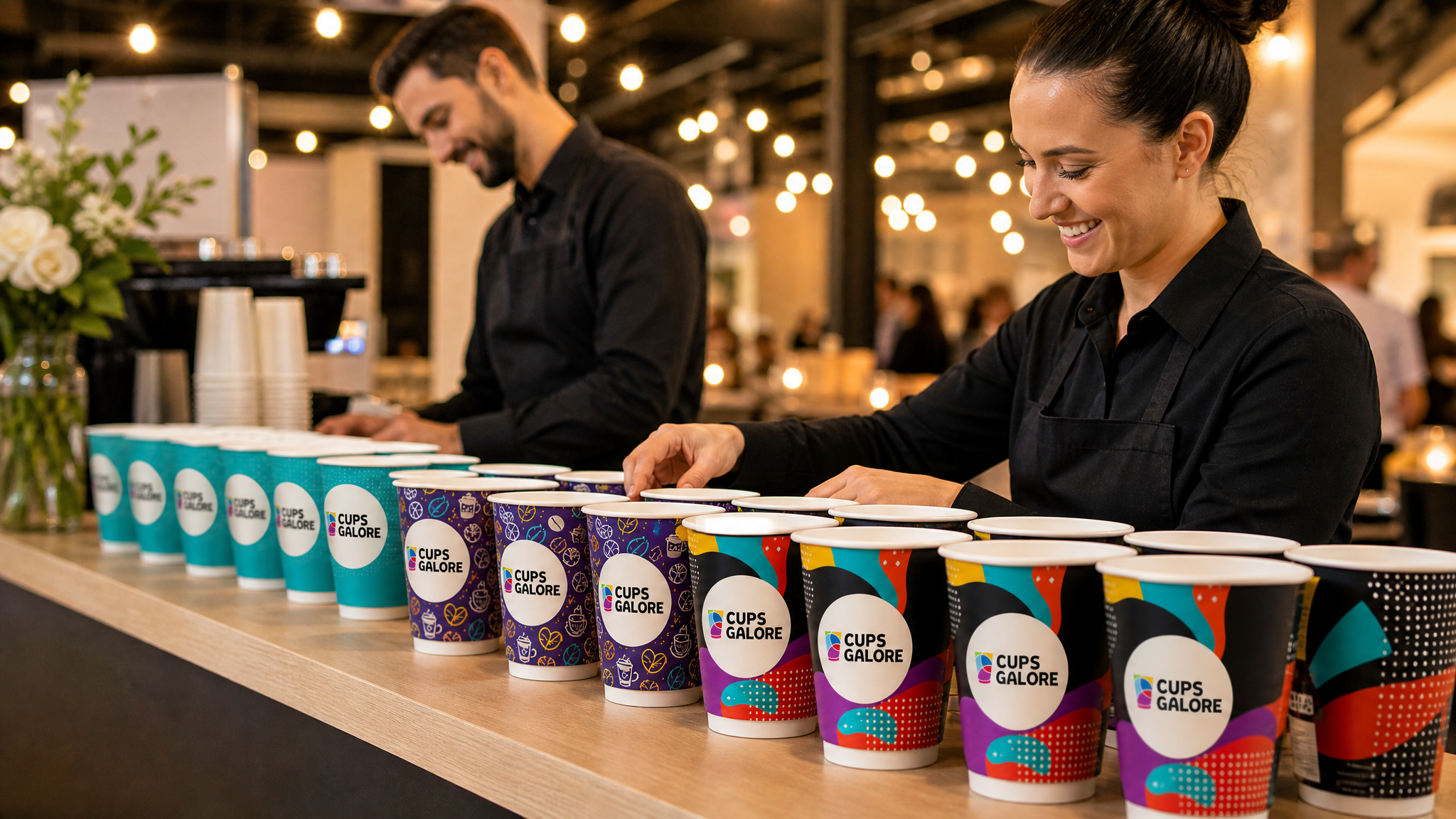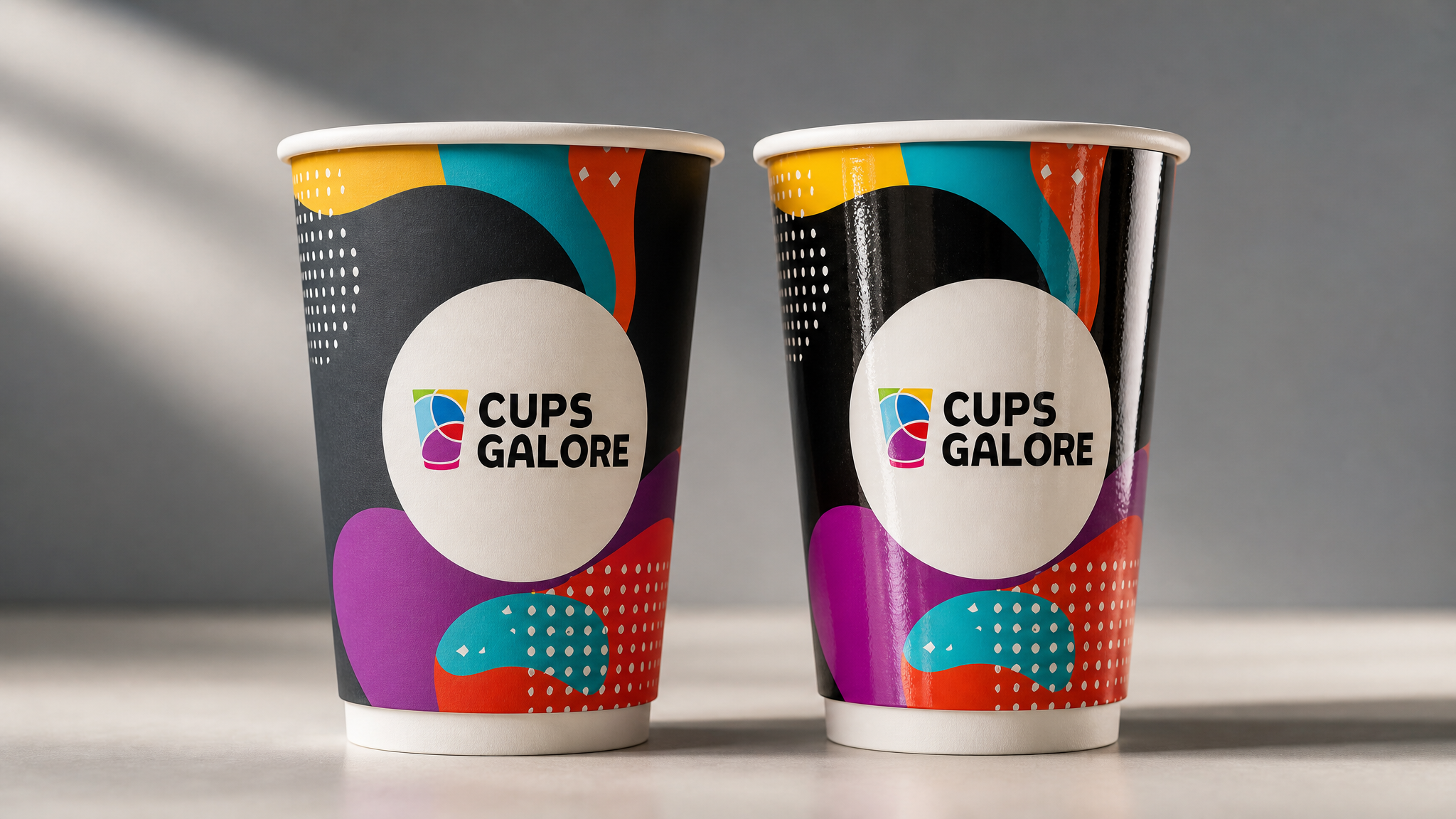
Single wall or double wall is one of the first product decisions a cafe or business makes when ordering custom paper cups. Both have legitimate use cases. The wrong choice creates real problems.
Single wall on a takeaway service where the customer walks ten minutes with a hot beverage produces complaints about heat transfer. Double wall on a dine-in service where cups get used briefly and cost per unit matters produces unnecessary expense.
Here is the practical framework we use with cafe operators when they are deciding.
What each construction actually is
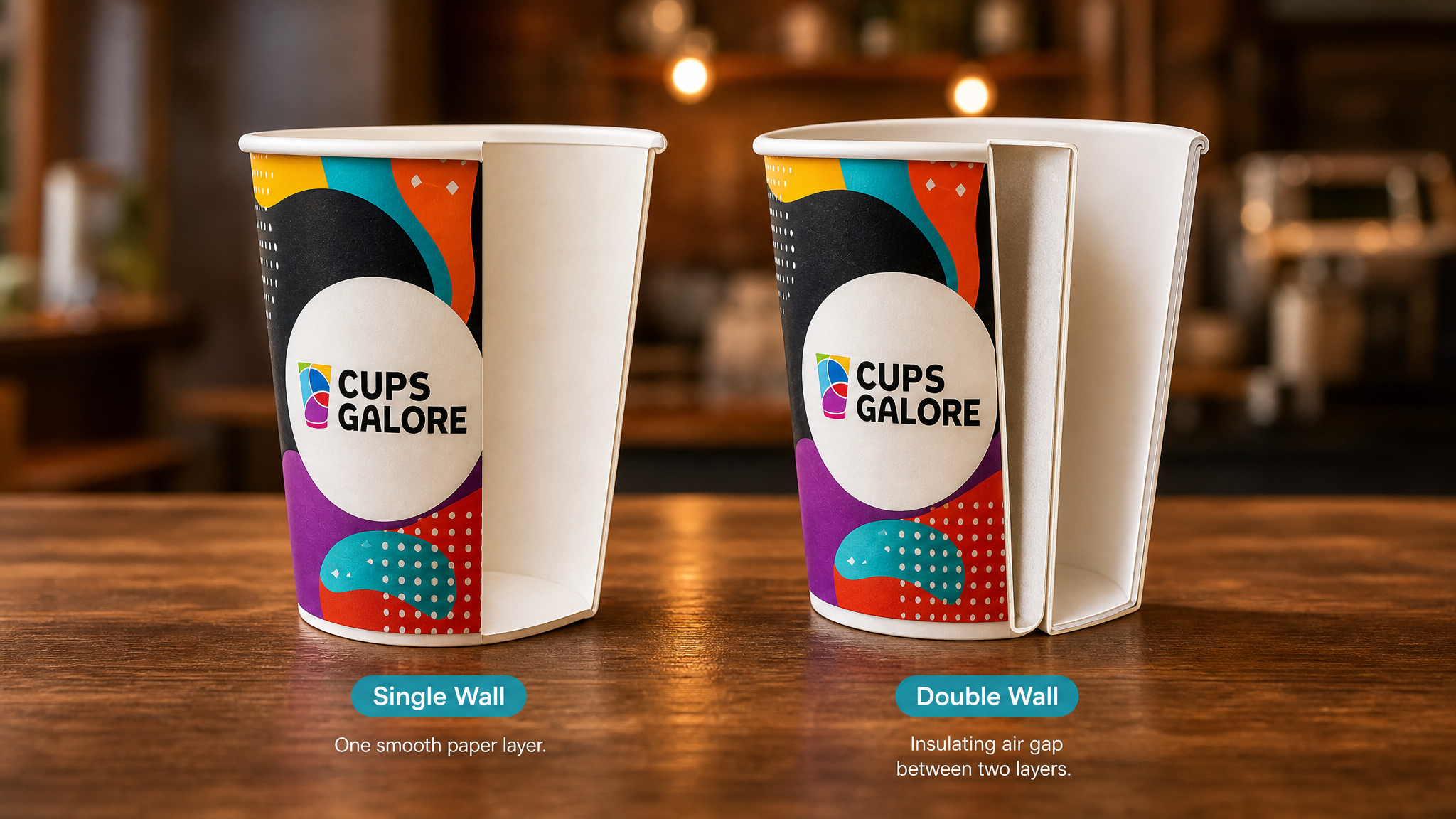
Single wall is a single layer of coated paperboard formed into a cup shape. Standard construction for iced beverages, cold water, dine-in service, and short-hold takeaway.
Double wall is two layers of coated paperboard with an air gap between them. The air gap acts as insulation, reducing heat transfer to the hand holding the cup. Standard construction for hot beverage takeaway service and premium cafe experiences.
Both are food-safe when HACCP certified. Both hold hot liquid safely. The difference is heat management on the outside surface and cost per unit.
When single wall is the right choice
Four scenarios.
Iced beverages. Cold drinks do not need insulation. Single wall handles condensation adequately and costs less per unit.
Dine-in service where cups are used briefly. Cups held for a few minutes at the counter or table before the drink is finished. Heat transfer is not an issue in that window.
Very short-hold takeaway. Customers walking a few metres from counter to seating. Heat transfer becomes noticeable only over longer holds.
Cost-sensitive high-volume operations. Where the customer expectation and use pattern do not justify the double wall premium, single wall wins on unit economics.
When double wall is the right choice
Four scenarios.
Standard hot beverage takeaway. Customers walking away from the cafe with a hot drink for more than a couple of minutes. Double wall prevents the cup from becoming uncomfortable to hold.
Mobile coffee carts and outdoor events. Cups held for extended periods outdoors, often in variable weather. Double wall insulation performs better across environmental variation.
Premium cafe positioning. Where the cup is part of a premium customer experience, the additional heft and quality of double wall communicates something the single wall does not.
Any application where cardboard sleeves would otherwise be used. Double wall eliminates the need for a separate cardboard sleeve, which reduces packaging complexity and improves the tactile experience.
Where cafes make the wrong call
Two failure patterns show up.
Single wall for hot takeaway to save money. The customer holds a cup that is uncomfortably hot, needs a sleeve, and forms an impression that the cafe is cutting corners. The unit-cost saving costs more in customer perception than it earns.
Double wall for iced service. Insulation is not needed. The premium price is not justified. The cafe is paying for a benefit the customer does not receive.
The cost differential
Double wall cups sit at a premium to single wall of the same size. The exact differential varies by volume and specification, but the shape is consistent. Double wall is not marginally more expensive. It is meaningfully more expensive.
The cost decision is not double wall versus single wall in isolation. It is double wall versus single wall plus cardboard sleeve versus customer perception of your brand. Run the maths on all three.
The takeaway
Single wall and double wall paper cups serve different use cases. The right construction for your cafe depends on how customers actually use the cup, how long they hold it, and where it fits in your brand positioning. Cost per unit is one input, not the whole answer.
Cups Galore produces both single wall and double wall paper cups in 8oz, 12oz and 16oz sizes. Talk to our team about the right construction for your operation.
Explore our custom cup range.